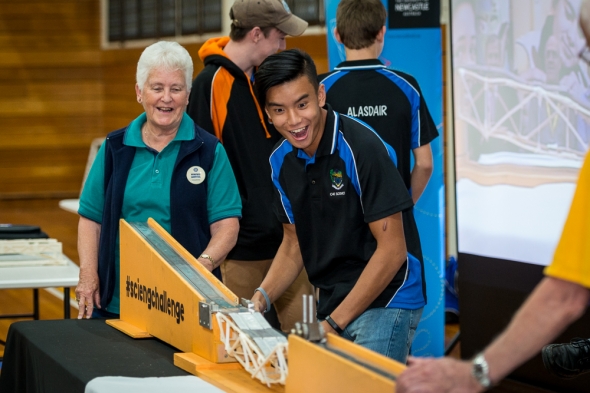
The Science and Engineering Challenge is a national STEM (Science, Technology, Engineering and Mathematics) outreach program. Our aim is to inspire students into STEM careers by giving primary and high school students unique and fun experiences in science and engineering. Based at the University of Newcastle, the Challenge was established in 2000 and has rapidly grown to become a national program with events in every Australian state and territory. We directly address Australia's STEM skill shortage by encouraging school students to make appropriate subject selections, pursue tertiary studies, and move into relevant apprenticeships and professional careers.
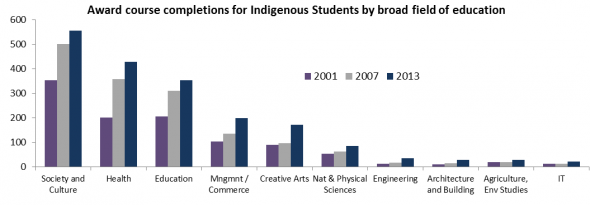
The University of Newcastle has a proud history in Indigenous education, and enrolment of Aboriginal and Torres Strait Islander students at the University is almost double the sector average. But despite this strong growth in Indigenous admissions in recent years, the share of enrolments in science (1.6%) and engineering (2.3%) is well below that of other degree areas, such as education and arts. With 75% of the fastest growing occupations worldwide requiring STEM skills and knowledge, it is vital that this gap is addressed.
We want to address the Indigenous STEM education gap by funding a dedicated Indigenous Science Communication Scholarship. Each year the Challenge offers a number of Science Communication Scholarships to undergraduate or ‘gap year’ students. These 20 week scholarships provide extensive opportunities to learn and practice essential science communication skills. Scholarship recipients train and travel with the Challenge team helping to run events in primary and high schools. They also study an online Science Communication course.
Profile of the Science and Engineering Challenge
The Science and Engineering Challenge runs a suite of programs in all states and territories, from our base at the University of Newcastle. Our largest outreach is the national competition for year 9-10 high school students and our Discovery Days for year 5-6 primary school students. Our key focus is on inspiring students in year 10 to consider a future career in science and engineering by choosing to study the enabling sciences and mathematics in years 11 and 12. The Challenge has a proven ability to get students to consider a wider spectrum of careers and to engage with STEM. This result is consistent and independent of participant’s gender, SES and geographic location.
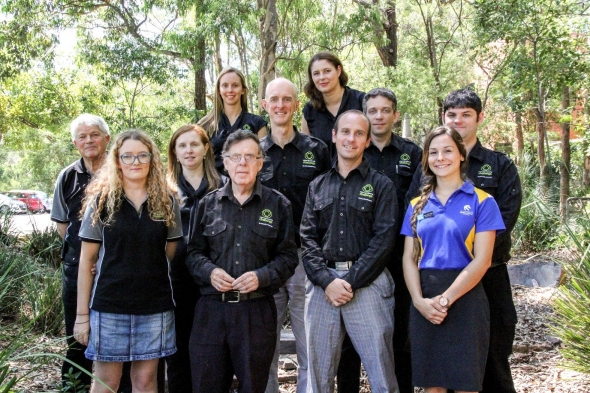
Our work directly enhances Australia’s technical capacity. We do this by increasing the pool of students with an interest and understanding of science and mathematics who can work in these fields and understand these issues. Many people perceive science and mathematics as ‘hard’ subjects. Through our Primary School and High School outreach programs we show that these subjects can be fun, as well as demonstrating the breadth of real applications and jobs in STEM areas. This exposure encourages students to reach their full potential.
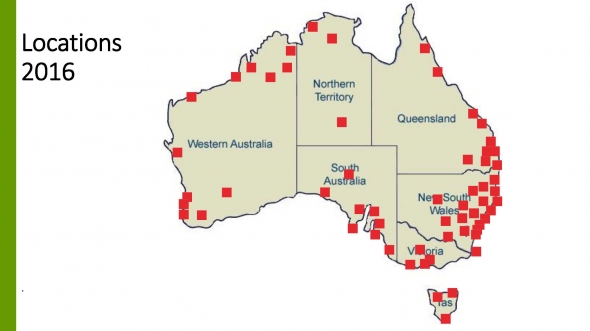
Although we are based at the University of Newcastle, our programs have a far reach...
And here's some more examples of the work we do...
Thank you for your interest and for supporting our campaign.
Give now and help close the Indigenous STEM education gap.
Why do we need an Indigenous Science Communication Scholar?
An increased Indigenous presence in Science and Engineering Challenge activities will provide a role model for the Indigenous school students who attend Challenge events. This builds the visibility of pathways from school maths and science to real jobs, and will help to drive the Indigenous STEM careers pipeline forward.
The Challenge team is working closely with The Wollotuka Institute at the University of Newcastle to generate interest in this initiative. Professor John Lester, Dean of Aboriginal and Torres Strait Islander Education and Research, sees clear value in a dedicated Indigenous Science Communication Scholar:
“This scholarship has many benefits. It gives an Indigenous university student an opportunity to learn new skills which will help them in their future career. It also creates a role model within the Indigenous community - an ambassador who can inspire school students to look at STEM education options which will increase STEM enrolments, participation and completions. Finally, it also provides a really important avenue for Aboriginal and Torres Strait Islander university students to bring their traditional culture into STEM education activities and show the strong link between Indigenous culture and science”.

Some of our other work
Our team has established, through annual and post event surveys, that the Challenge’s positive effects are independent of gender, geographic location, pre-existing interests and academic ability. Direct educational benefits are shown through our annual surveys.
TEACHER EVALUATION OF CHALLENGE EVENTS AND PROGRAM – 2015
- 98% Satisfied with organisation of the event
- 99% Satisfied with student activities
- 100% Would bring students again
- 100% Would encourage other schools to attend
- 95% said they took ideas from the Challenge and used them in the classroom
- 82% said they have noticed impacts on their students choosing the enabling sciences and math as a result of participation in the Challenge
- 70% of teachers stated that participation in the Challenge will change the level of encouragement they will give to students to consider a career in science and/or engineering
STUDENT EVALUATION OF CHALLENGE EVENTS AND PROGRAMS - 2015
Students are surveyed 12 months after attending the Challenge event, when enrolled in the enabling sciences and mathematics in year 11. This delay in assessment is an important tool in measuring the success of the program. While most programs assess satisfaction immediately, the Challenge waits to determine if people act on the influence they felt the program had. The impact of the event on students had to be exceptionally significant for them to respond positively 12 months after the event. The results for student satisfaction are far in excess of any other program in action in Australia.
- 94% of students found the Challenge rewarding
- 90% found the Challenge informative about relevant potential careers
- 40% of students studying mathematics were influenced by the Challenge to choose this subject
- 58% of students studying Physics were influenced by the Challenge to choose this subject
- 39% of students studying Chemistry were influenced by the Challenge to choose this subject
Our key challenge is encouraging Indigenous students to consider STEM studies. This stark diagram shows how great that challenge is. Where other fields of study are showing increases in degree admissions and completions, STEM studies remain very low.